
A new concrete driveway Kansas City homeowners invest in can last 30 to 40 years when installed correctly, according to the Michigan Department of Transportation. That’s more than double the lifespan of an asphalt alternative. But hitting that kind of longevity doesn’t happen by accident. It takes the right contractor, proper site preparation, quality materials, and careful finishing work to get results that hold up through decades of Kansas City weather.
At Gold’s Concrete Services, we’ve been pouring driveways across the Kansas City Northland since 1989. Over 35 years and thousands of projects, we’ve refined every step of the installation process. This guide walks you through exactly what goes into a professional concrete driveway project, from the first site visit to final sealing, so you know what to expect and what questions to ask before your project begins.
What Does a New Concrete Driveway Kansas City Installation Actually Cost?
According to the Concrete Network, a standard concrete driveway runs between $5 and $8 per square foot for a basic broom-finish installation. For a typical two-car driveway in the Kansas City area, that translates to roughly $3,200 to $13,000 depending on size, site conditions, and any decorative finishes you choose.
Several factors affect the final price of your project. The size of the driveway is the most obvious variable. A simple single-car approach costs significantly less than a wide two-car driveway with a turnaround area. But size alone doesn’t tell the whole story.
Site conditions play a major role too. If your existing driveway needs to be removed first, that adds to the project cost. Properties with poor drainage or steep grades may require extra grading work and sub-base preparation. We always assess these factors during our free estimate visit so there are no surprises once work begins.
The concrete mix itself matters more than most homeowners realize. At Gold’s Concrete, we use a 4,000 PSI mix with 6% air entrainment and fiber mesh reinforcement on every exterior pour. Some contractors cut costs by using lower-grade mixes without these additions. You might save a few hundred dollars upfront, but you’ll likely pay for it in repairs within just a few years, especially with Kansas City’s freeze-thaw cycles.
Step 1: Assessing Your Property and Planning the Layout
Every successful driveway project starts with a thorough site assessment. When our team visits your property, we’re evaluating several critical factors that will determine how your driveway is built and how long it lasts.
First, we look at the overall slope and drainage patterns. Water needs to flow away from your home’s foundation and away from the driveway surface. In the Kansas City Northland, we deal with clay-heavy soils that don’t drain particularly well, so proper grading is essential from day one.
We also identify any obstacles that need to be addressed. Utility lines, tree roots, existing landscaping features, and the connection point to the street all influence the driveway design. If you have an existing driveway that needs removal and replacement, we’ll assess the condition of the sub-base underneath to determine how much additional prep work is needed.
During this visit, we’ll discuss the driveway dimensions, shape, and any special features you want. Do you need a wider approach for easier parking? Want a walkway connection to your front door? Planning for future additions like a patio or basketball court? Now is the time to map all of that out.
Step 2: Choosing the Right Concrete Contractor
Selecting your contractor might be the single most important decision in the entire project. The National Association of Realtors reports that 97% of its members consider curb appeal important for attracting potential buyers. Your driveway is one of the first things people notice about your home, so the quality of installation directly impacts your property’s appearance and value.
When interviewing contractors for your new concrete driveway Kansas City project, ask these specific questions. What PSI concrete do they use? Do they include air entrainment in their mix? What kind of reinforcement do they install? How do they handle control joints? A contractor who can’t answer these questions confidently probably isn’t the right fit.
A new concrete driveway Kansas City families rely on for years starts with choosing the right team. Check their licensing, insurance, and references. Ask to see photos of recent projects, not just their best work from five years ago. Read online reviews carefully, paying attention to how the contractor handles problems when they arise. At Gold’s Concrete, we’re proud of our 35-year track record and strong Google reviews from Kansas City Northland homeowners.
Get everything in writing before work begins. A professional contract should include the scope of work, materials specifications, timeline, payment schedule, and warranty details. If a contractor won’t put their promises on paper, that’s a red flag you shouldn’t ignore.
Step 3: Preparing the Site for Your New Driveway
Proper site preparation is what separates a new concrete driveway Kansas City residents can depend on from one that fails early. This is where many contractors cut corners, and it’s also where problems start. A driveway is only as good as the ground underneath it. Skip this step or do it poorly, and you’ll see cracks and settling within the first few years regardless of how good the concrete itself is.
If there’s an existing driveway, it needs to come out completely. We remove all the old concrete, haul away the debris, and then assess what’s underneath. Sometimes the old sub-base is still solid and can be reused with minor corrections. Other times, it needs to be rebuilt from scratch.
Next comes grading. We shape the ground to create the proper slope for drainage, typically aiming for about a 1% to 2% grade away from your home. This prevents water from pooling on the surface or flowing toward your foundation. In areas of the Kansas City Northland with particularly flat lots, we sometimes incorporate subtle drainage channels into the design.
After grading, we compact the soil and add a 2-inch layer of compacted gravel as the sub-base. This gravel layer serves two purposes. It provides a stable, level surface for the concrete to sit on, and it improves drainage underneath the slab. We use specific gravel sizes and compaction equipment to make sure this base is rock solid before any concrete arrives.
Finally, we set the forms. These are the wooden or metal borders that define the edges of your driveway and hold the concrete in place while it cures. Proper form work requires precision. The forms must be straight, level where needed, and properly sloped to match our drainage plan.
Step 4: Reinforcement and Pre-Pour Preparation
Before any concrete shows up on site, we install our reinforcement system. This is another area where Gold’s Concrete goes beyond what many contractors offer. We use a combination of rebar and fiber mesh to create a driveway that resists cracking from multiple angles.
Our standard setup includes rebar on 30-inch centers, elevated to the center of the slab thickness. Rebar sitting on the ground does nothing. It needs to be positioned in the middle of the concrete where it can actually absorb tensile forces and hold everything together if a crack does develop.
We also include fiber mesh reinforcement in every exterior pour at no extra charge. These tiny synthetic fibers distribute throughout the concrete mix and help prevent surface cracking during the early curing stages. Think of it as millions of tiny reinforcing threads woven throughout the entire slab. You can learn more about this on our concrete driveways service page.
Before the pour, we double-check all our measurements, verify the form positions, confirm the sub-base compaction, and make sure all reinforcement is properly placed and elevated. We also coordinate the concrete delivery timing carefully because once that truck arrives, the clock starts ticking.
Step 5: Pouring and Placing the Concrete
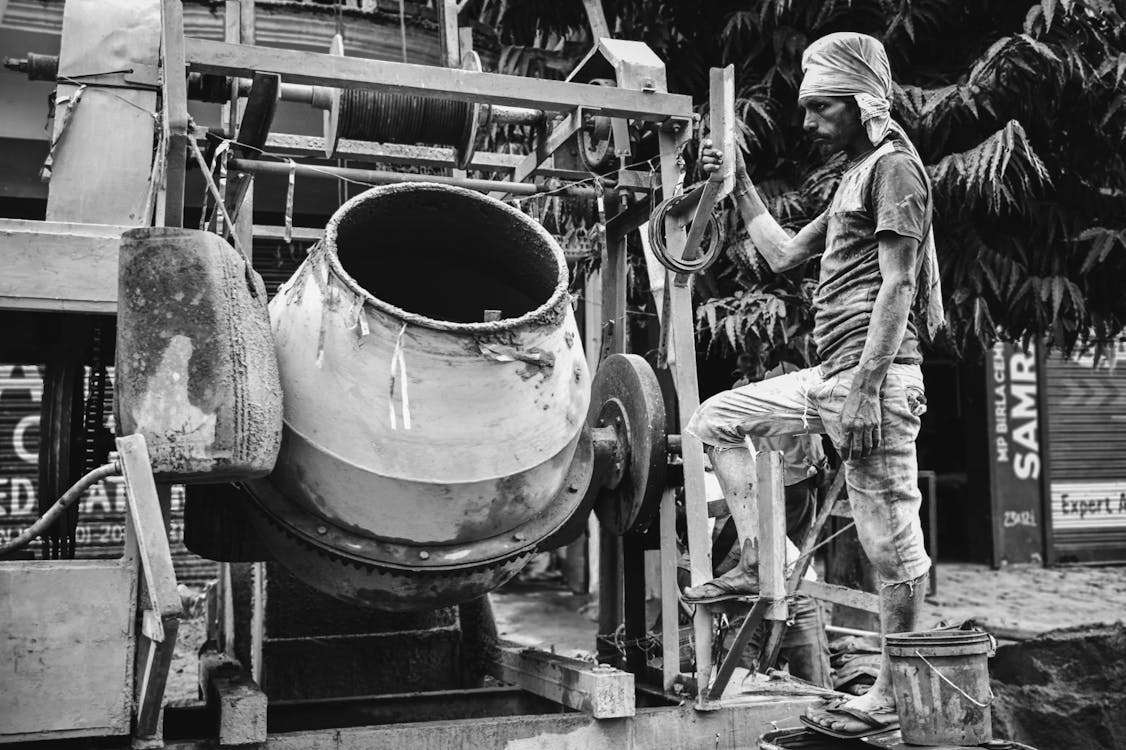
Pour day is when your new concrete driveway Kansas City project really comes together. The ready-mix concrete arrives by truck, and our crew works quickly and methodically to place it into the prepared forms. Timing matters enormously here because concrete begins its chemical curing process the moment water hits cement.
We specify a 4,000 PSI concrete mix with 6% air entrainment for all our exterior work in the Kansas City area. The higher PSI rating means greater compressive strength, which translates to better performance under vehicle traffic. The 6% air entrainment creates microscopic air bubbles throughout the concrete that protect it during freeze-thaw cycles, something Kansas City driveways experience roughly 104 times per year according to NOAA climate data.
As the concrete flows from the truck into the forms, our crew spreads and levels it using screeds and hand tools. We work methodically across the entire surface to eliminate voids, ensure consistent thickness, and create the proper slope for drainage. Every section gets attention because problems hidden beneath the surface now will show up as failures later.
The pour itself typically takes one to three hours depending on the driveway size. During this time, we’re constantly monitoring the concrete’s behavior. Temperature, humidity, and wind speed all affect how quickly it sets. On hot Kansas City summer days, we may need to work faster. On cooler fall mornings, we have more time but need to watch for different issues.
Step 6: Finishing Your New Concrete Driveway
Finishing is where craftsmanship really shows. Once the concrete is placed and initially leveled, we wait for it to reach the right consistency for finishing work. This timing window is critical and it’s something that separates experienced crews from inexperienced ones.
First, we use a bull float to smooth the surface and push aggregate below the top layer. Then we hand-tool the edges along the forms to create clean, rounded edges that resist chipping. This hand work makes a visible difference in the final product’s appearance and durability.
Control joints are one of the most important finishing details. Concrete will crack as it cures and moves with temperature changes. Control joints give the concrete a predetermined place to crack, keeping those cracks straight and controlled rather than random and ugly. We hand-tool our control joints rather than saw-cutting them after the fact. Hand-tooled joints create a cleaner, more precise line and bond better with the concrete.
For the surface texture, most driveways get a broom finish. We drag a specialized broom across the surface to create a slightly rough texture that provides excellent traction in wet and icy conditions. This is especially important for Kansas City Northland driveways that deal with rain, snow, and ice for several months each year.
After finishing, we apply a professional-grade acrylic cure and seal product. This serves double duty. It slows down the curing process so the concrete achieves maximum strength, and it seals the surface to protect against moisture penetration, staining, and UV damage. The result is a driveway that looks great from day one and stays protected through its critical early curing period.
Step 7: Curing and Long-Term Maintenance
The work doesn’t end when the finishing crew packs up. Concrete needs time to cure properly, and what happens during the first 28 days dramatically affects the driveway’s long-term performance. Full compressive strength takes about 28 days to develop, though the concrete will continue to harden slightly for months after that.
During the first week, keep all vehicles off the surface. Light foot traffic is fine after 24 to 48 hours, but the concrete needs time to develop enough strength to handle the weight and pressure of cars and trucks. We’ll give you specific guidance based on the weather conditions during your pour.
For long-term maintenance, a new concrete driveway Kansas City homeowners can count on really comes down to a few simple practices. Reapply sealer every two to three years to maintain surface protection. Clean up oil spills and chemical stains promptly before they penetrate the surface. Avoid using deicing salts during the first winter; use sand for traction instead.
If you notice any minor cracks developing along control joints, that’s actually normal and by design. Those joints are doing their job by directing any movement to predetermined locations. If you see cracks forming outside of control joints or any significant settling, contact your contractor right away to address the issue before it gets worse.
How a New Concrete Driveway Boosts Your Property Value
A well-installed concrete driveway is one of the best curb appeal investments you can make. Industry data from Angi and other home improvement sources suggests that a new driveway can increase property value by 5% to 10%, with a return on investment between 50% and 80%.
Beyond the raw numbers, there’s the daily quality-of-life improvement. No more dodging potholes in your own driveway. No more worrying about puddles forming near your garage. No more embarrassment when guests pull up to a cracked, stained, or crumbling surface. A clean, properly installed driveway makes your entire property look more polished and well-maintained.
For Kansas City Northland homeowners thinking about selling in the next few years, a new driveway can be particularly impactful. Real estate agents consistently rank driveways and exterior surfaces among the first things buyers notice during a showing. First impressions matter, and your driveway sets the tone before anyone walks through the front door.
Why Kansas City’s Climate Demands Quality Concrete Work
Kansas City’s weather is tough on concrete. We experience hot, humid summers that can push temperatures above 100 degrees, followed by winters where the mercury drops well below freezing. According to NOAA climate records, the Kansas City metro area experiences approximately 104 freezing days per year. That means your driveway goes through over a hundred freeze-thaw cycles annually.
Each one of those cycles stresses the concrete. Water seeps into tiny pores, freezes and expands by about 9%, then thaws and contracts. Without proper air entrainment and quality materials, this repeated expansion and contraction breaks down the concrete surface from the inside out. You’ll see it as scaling, spalling, and eventually chunks of concrete breaking away.
That’s exactly why we insist on 6% air entrainment and 4,000 PSI concrete for every exterior project. These aren’t arbitrary numbers. They’re specifications backed by decades of experience pouring concrete in this specific climate. Our driveways from the 1990s are still holding up because we’ve always prioritized the right materials over the cheapest price.
Frequently Asked Questions About New Concrete Driveways
How long does it take to install a new concrete driveway?
Most residential driveway projects take 3 to 5 days from start to finish. This includes one day for removal of the old surface if needed, one to two days for site prep and forming, one day for the pour and finishing, and then curing time before you can drive on it. We typically recommend staying off the surface for 7 days.
Can I pour a new driveway over my old one?
We don’t recommend it. Pouring over an existing damaged surface means the new concrete inherits all the problems underneath. Cracks, voids, and settling in the old slab will telegraph through to the new surface. Our removal and replacement process ensures you start with a clean, stable foundation.
What is the best time of year to pour a concrete driveway in Kansas City?
Spring through fall is ideal for concrete work in the Kansas City area. We typically pour from late March through mid-November, depending on weather conditions. Temperatures between 50 and 85 degrees are optimal for concrete curing. We monitor forecasts carefully and won’t pour if conditions aren’t right.
How thick should a concrete driveway be?
We pour residential driveways at 4 inches thick as a standard. For areas that will handle heavier vehicles like RVs, trailers, or work trucks, we increase to 5 or 6 inches and add heavier reinforcement. The American Concrete Pavement Association provides guidelines for pavement thickness based on expected traffic loads.
Do I need permits for a new driveway in Kansas City?
Most Kansas City Northland municipalities require permits for driveway installation or replacement. Requirements vary by city. We handle the permitting process as part of our service so you don’t have to navigate that paperwork on your own. Check with your local planning department for specific requirements in your area.
What’s the difference between broom finish and stamped concrete?
A broom finish is the standard textured surface you see on most driveways. It provides excellent traction and costs less than decorative options. Stamped concrete is pressed with patterns that mimic brick, stone, or other materials. It costs more but creates a distinctive look. Both options work well for a new concrete driveway Kansas City homeowners choose when properly installed.
How do I maintain my new concrete driveway?
Maintenance is straightforward. Reseal the surface every 2 to 3 years with an acrylic sealer. Clean stains promptly. Avoid deicing chemicals during the first winter. Keep heavy equipment off the edges where concrete is thinnest. With basic care, your driveway should last 30 years or more. Visit our services page for more details.
Ready to Start Your New Concrete Driveway Project?
Getting a new concrete driveway is a significant home improvement investment, and it deserves a contractor who takes every step seriously. At Gold’s Concrete Services, we’ve spent over 35 years perfecting our process for the Kansas City Northland climate. From proper site preparation and premium materials to expert finishing and clear communication throughout the project, we handle every detail so you can enjoy a driveway that performs for decades.
Whether you’re replacing a worn-out surface or installing a driveway on new construction, we’re ready to help. We also handle patios, sidewalks and walkways, steps and stairs, and garage floors with the same commitment to quality.
Contact Gold’s Concrete Services today at (816) 300-1563 or request a free quote online. Check out our project gallery to see examples of our work throughout the Kansas City Northland.