
What Is Fiber Mesh Concrete and Why Should Kansas City Homeowners Care?
Fiber mesh concrete is regular concrete mixed with millions of tiny synthetic fibers that provide three-dimensional reinforcement throughout the entire slab. According to the Fiber Reinforced Concrete Association, the standard dosage for residential applications is 1.5 pounds per cubic yard minimum for temperature and shrinkage control. Unlike traditional wire mesh that sits in a single plane, these fibers distribute in every direction — giving your driveway, patio, or sidewalk crack resistance from top to bottom.
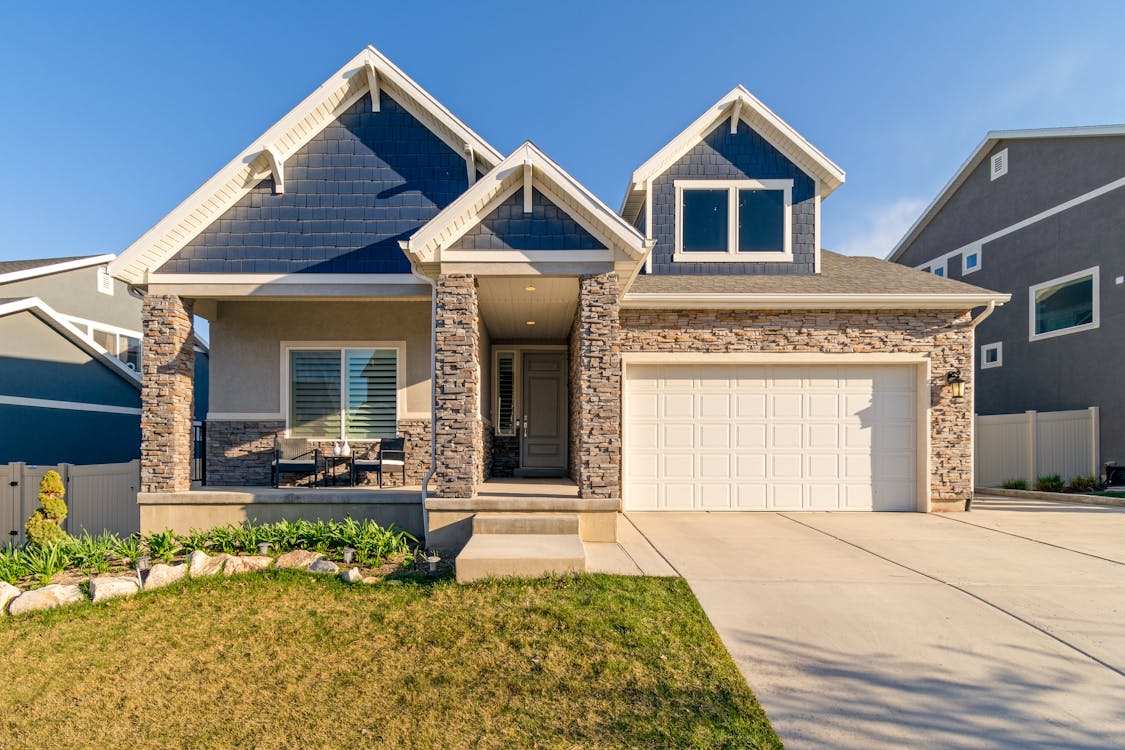
At Gold’s Concrete Services, we include fiber mesh in every pour at no additional cost. We’ve been doing this across the Kansas City Northland for years because we’ve seen the difference it makes firsthand. After 35+ years of pouring concrete in Clay County and Platte County, we know that fiber mesh concrete isn’t just an upgrade — it’s a necessity for our climate.
This article covers exactly how fiber mesh works, what the research says about its performance, and why we combine it with rebar for the most durable results possible. Whether you’re planning a new driveway, patio, or sidewalk, understanding fiber mesh will help you make a smarter investment.
How Does Fiber Mesh Concrete Reduce Cracking?
The primary benefit of fiber mesh concrete is its dramatic reduction in cracking. A peer-reviewed study published through the National Institutes of Health found that polypropylene fiber reinforcement at just 0.1% volume reduces crack width by 84% and delays initial cracking by 62%. Those numbers explain why fiber mesh has become standard practice for quality-focused contractors across the industry.
Here’s what happens inside fiber mesh concrete when stress develops. As concrete cures and dries, it shrinks slightly. That shrinkage creates internal tension that pulls the material apart. Without reinforcement, the concrete cracks wherever it’s weakest — often in random, ugly patterns across your driveway surface.
With fiber mesh mixed throughout the slab, millions of tiny fibers bridge across those stress points before cracks can form. The fibers hold the concrete together at a microscopic level, distributing the stress across a wider area instead of concentrating it at a single weak point. Research from Banthia and Gupta found that using just 0.1% polypropylene fibers resulted in a 60% reduction in the number of plastic shrinkage cracks. At 0.5% fiber volume, plastic shrinkage cracking was eliminated entirely.
That’s not a minor improvement. That’s nearly eliminating one of the most common causes of early concrete failure.
What Types of Fiber Mesh Work Best for Residential Concrete?
Not all fiber mesh is created equal. The three main types used in residential fiber mesh concrete are polypropylene (synthetic), steel, and glass fibers. Each serves a different purpose, and choosing the right type matters for your specific application.
Polypropylene (synthetic) fibers are what we use at Gold’s Concrete for residential applications. They’re lightweight, corrosion-proof, and excellent at controlling plastic shrinkage cracking. A 2025 study published in Nature’s Scientific Reports showed that a hybrid polypropylene fiber mixture achieved compressive strength improvements of 4.84%, splitting tensile strength gains of 10.02%, and flexural strength improvements of 15.83% at 0.3% fiber volume.
Steel fibers are typically reserved for industrial and commercial applications. Research published through ScienceDirect found that steel fiber reinforced concrete demonstrates six times the impact resistance of normal concrete. However, steel fibers can corrode over time in exterior applications exposed to moisture and deicing salts — making them less ideal for Kansas City driveways.
Glass fibers are used primarily in decorative concrete and precast products. They offer good early-age crack resistance but can lose effectiveness over time in alkaline concrete environments.
For driveways, patios, and sidewalks in the Kansas City area, polypropylene fiber mesh concrete gives you the best combination of crack resistance, durability, and cost-effectiveness. It won’t corrode, it won’t rust-stain your concrete, and it provides protection throughout the entire slab thickness.
Why Is Fiber Mesh Concrete Essential for Kansas City’s Climate?
Kansas City averages 107 days at or below freezing every year. That means your concrete faces constant freeze-thaw cycling where water seeps into tiny pores, freezes, expands by roughly 9%, and cracks the material from the inside out. The Midwest averages 42 freeze-thaw cycles per year, and some years see 60 or more.
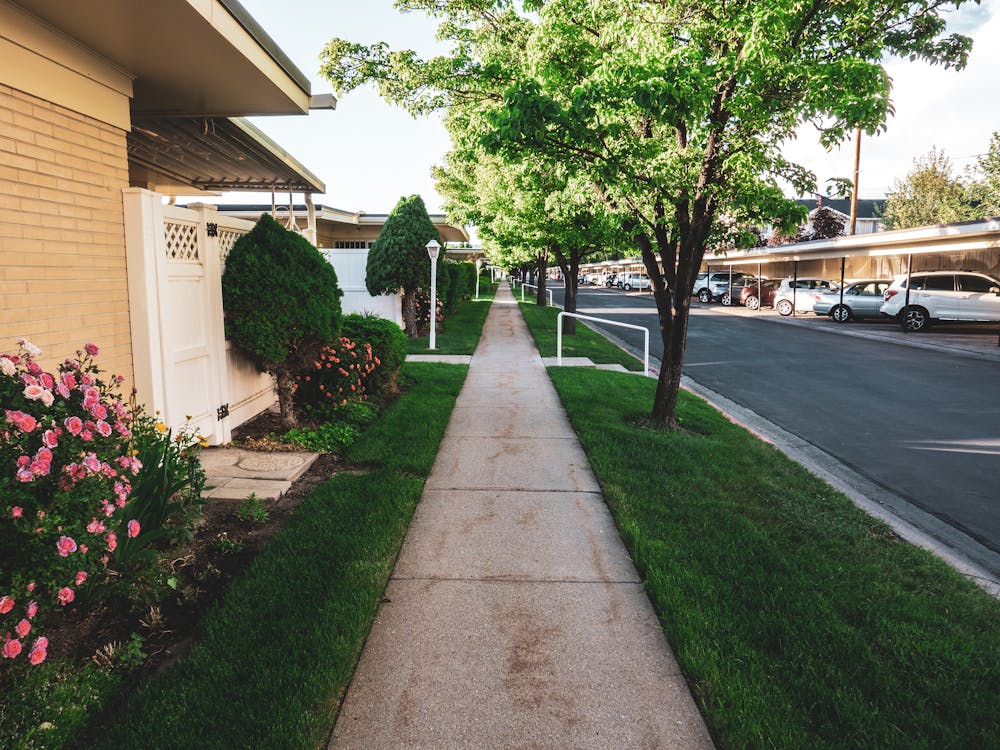
Fiber mesh concrete addresses this in two ways. First, the fibers reduce the size and number of cracks that form during curing, which means fewer entry points for water. Research published in Cogent Engineering found that polypropylene fiber reduced water penetration by 33% and water absorption by 30% in concrete mixes. Less water getting in means less freeze-thaw damage over time.
Second, when micro-cracks do develop from freeze-thaw stress, the fibers bridge across those cracks and prevent them from widening into the kind of damage you can see and feel on the surface. Studies show that fiber-reinforced concrete with 1.5% fiber content achieved a 74% reduction in total crack area and 70% reduction in maximum crack width.
This is why we don’t treat fiber mesh as an optional add-on. In our climate, fiber mesh concrete isn’t a luxury — it’s basic protection against the weather conditions your driveway will face every single year. We pair fiber mesh with our 6% air entrainment specification to provide comprehensive freeze-thaw defense.
Fiber Mesh vs. Wire Mesh: Which Is Better for Driveways?
This is one of the most common questions we hear from homeowners comparing fiber mesh concrete to traditional wire mesh reinforcement. The honest answer? They serve different purposes, and for residential driveways in Kansas City, fiber mesh has significant advantages.
How fiber mesh wins for residential work:
- Three-dimensional reinforcement — Fiber mesh distributes throughout the entire slab in every direction. Wire mesh sits in a single horizontal plane, typically in the bottom third of the slab where it provides minimal protection against surface cracking.
- No corrosion risk — Polypropylene fibers can’t rust. Wire mesh can corrode over time, especially when exposed to moisture and deicing chemicals. That corrosion causes expansion that cracks the concrete from within.
- Consistent placement — Fiber mesh is mixed directly into the concrete, so distribution is uniform and automatic. Wire mesh must be manually positioned and often shifts during the pour. We’ve torn out competitors’ work where the wire mesh ended up sitting on the ground instead of being elevated in the slab.
- Better crack control — Wire mesh doesn’t prevent cracks. It holds cracked concrete together after the fact. Fiber mesh actually reduces crack formation before it happens.
Where wire mesh still matters:
Wire mesh and rebar provide structural load-bearing capacity that fiber mesh alone can’t match. That’s why we don’t rely on fiber mesh alone. We use both — fiber mesh throughout the slab for micro-crack control, plus rebar on 30-inch centers elevated to the center of the slab for structural reinforcement. This same approach applies to our concrete steps and stairs where structural integrity is critical.
A 2023 study published in Structures journal found that polypropylene fibers improved flexural cracking strength by 28%, while steel mesh improved it by 79%. The combination of fiber mesh and rebar gives you the crack prevention benefits of fibers with the structural strength of steel reinforcement. It’s a belt-and-suspenders approach that delivers the best long-term results.
How Does Fiber Mesh Concrete Reduce Shrinkage Cracking?
Shrinkage cracking happens in two phases: plastic shrinkage (while the concrete is still wet) and drying shrinkage (as it cures over weeks and months). Fiber mesh concrete addresses both phases, which is critical for getting a crack-free finish that lasts.
Plastic shrinkage occurs within the first few hours after pouring, when water evaporates from the concrete surface faster than it can bleed from within. This creates surface tension that pulls the concrete apart before it has developed any strength. Research shows that polypropylene and polyester fibers can reduce plastic shrinkage crack area by up to 99.87% compared to plain concrete.

Drying shrinkage continues for months as the remaining moisture in the concrete evaporates. A comprehensive review published in Construction and Building Materials found that synthetic textile fibers reduce drying shrinkage by 10-50%. This ongoing protection matters because drying shrinkage cracks often don’t appear until weeks or months after installation.
Kansas City summers bring high humidity and temperatures regularly hitting 90+ degrees. These conditions accelerate surface evaporation and increase the risk of plastic shrinkage cracking. Fiber mesh concrete gives us additional protection during those hot afternoon pours when conditions are most challenging. Combined with our professional-grade acrylic cure and seal application, fiber mesh helps ensure your concrete develops its full rated strength.
What Does Fiber Mesh Concrete Cost Compared to Standard Concrete?
Here’s the good news: fiber mesh is one of the most cost-effective upgrades you can make to a concrete project. The material cost for polypropylene fiber mesh adds roughly $0.15-$0.25 per square foot to a concrete pour. For a typical 500-square-foot driveway, that’s $75-$125 in added material cost.
Compare that to the cost of repairing or replacing a cracked driveway. Current 2025 pricing data shows concrete driveway replacement costs between $8 and $20 per square foot, with total project costs ranging from $2,700 to $14,500. A few hundred dollars in fiber mesh today can save you thousands in premature concrete removal and replacement down the road.
At Gold’s Concrete Services, we include fiber mesh in every pour at no additional charge. We don’t list it as an upgrade or an add-on because we believe it should be standard for every exterior concrete project in the Kansas City area. When you get a free quote from us, fiber mesh is already included in the price.
How Does Fiber Mesh Fit Into a Complete Concrete Specification System?
Fiber mesh concrete works best when it’s part of a comprehensive specification system. On its own, fiber mesh addresses micro-cracking and shrinkage. But your driveway needs protection against multiple threats: freeze-thaw damage, structural loads, soil movement, and surface wear. That takes a coordinated approach.
Here’s the complete specification we use for every driveway, patio, and sidewalk:
- Fiber mesh reinforcement throughout the slab for micro-crack control
- Rebar on 30-inch centers elevated to the center of the slab for structural strength
- 6% air entrainment for freeze-thaw protection (see our article on durable concrete driveways)
- 4,000 PSI concrete mix without fly ash for optimal density and strength
- 2-inch compacted gravel sub-base (minimum) for drainage and stability
- Hand-tooled control joints for controlled crack patterns
- Professional-grade acrylic cure and seal applied after finishing
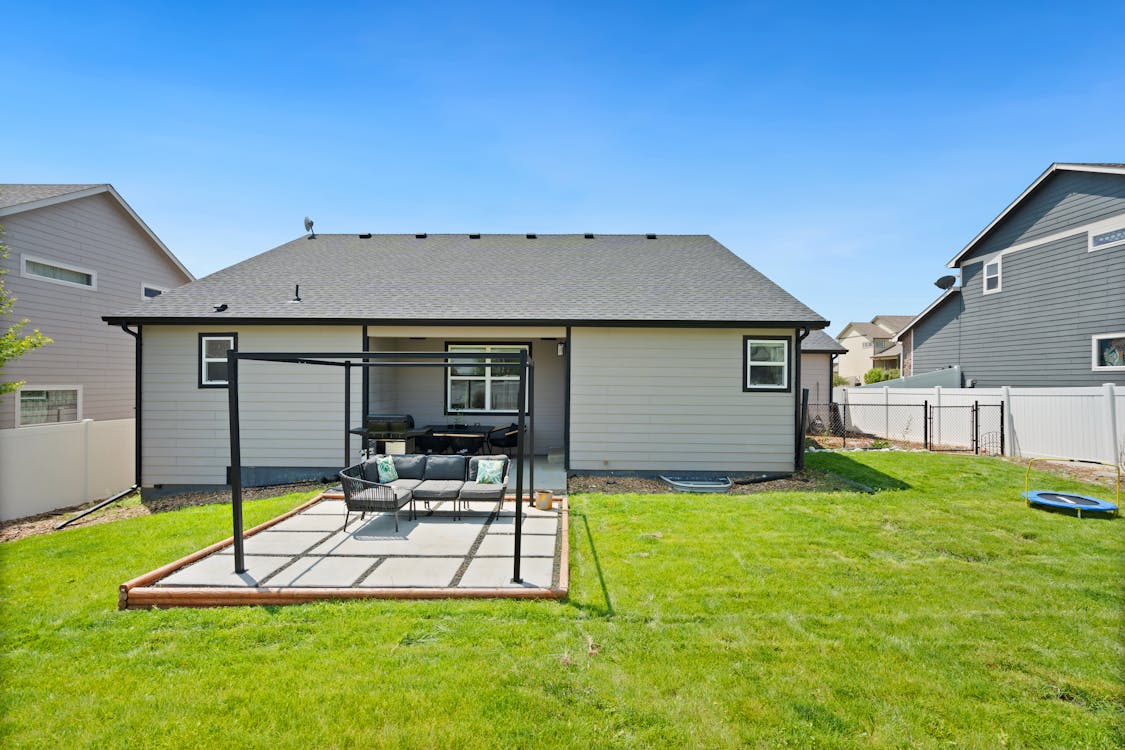
Each specification addresses a different failure mode. Remove any one element, and you create a vulnerability. Fiber mesh handles the cracking that happens from within the concrete itself. Air entrainment handles freeze-thaw. The sub-base handles soil issues. Rebar handles structural loads. Control joints direct inevitable stress cracks to predetermined locations.
This integrated approach is what separates our work from contractors who rely on a single reinforcement method and hope for the best. It’s the same system we use for garage floors and every other concrete project we take on.
Can Fiber Mesh Replace Rebar in Residential Concrete?
This is a question we get frequently, and the answer matters. Fiber mesh concrete does many things well, but replacing rebar entirely isn’t one of them for most residential applications.
Fiber mesh excels at controlling shrinkage cracks, reducing surface cracking, and improving the concrete’s resistance to impact and abrasion. But it doesn’t provide the same structural load-bearing capacity as steel reinforcement. Your driveway supports cars, trucks, and potentially delivery vehicles. The rebar is what handles those concentrated loads.
Think of it this way: fiber mesh prevents the concrete from cracking apart, while rebar prevents it from breaking apart. Both are essential. The fiber mesh handles the millions of small stresses from temperature changes, moisture fluctuations, and curing shrinkage. The rebar handles the big loads — a 6,000-pound SUV driving onto the driveway, or a garbage truck rolling over the apron every week.
Some contractors skip rebar and tell homeowners that fiber mesh is “just as good.” It’s not. And some skip fiber mesh and rely solely on rebar. That leaves your concrete surface unprotected against the kind of micro-cracking that leads to scaling and spalling. We use both because both are necessary. Our 35 years of experience have confirmed that the combination delivers the best long-term results.
What Should You Ask Your Contractor About Fiber Mesh?
Now that you understand how fiber mesh concrete works, here are the questions to ask when getting estimates for your project:
- “Do you include fiber mesh in your standard mix?” — It should be included, not a paid upgrade. If a contractor charges extra for fiber mesh, ask yourself what other standard practices they’re skipping.
- “What type of fiber do you use?” — For residential exterior work, polypropylene (synthetic) fibers are the standard. Avoid contractors who can’t tell you what type they use.
- “What’s your fiber dosage rate?” — The Fiber Reinforced Concrete Association recommends a minimum of 1.5 pounds per cubic yard for shrinkage control. Higher dosages may be appropriate for specific applications.
- “Do you also use rebar or wire mesh?” — A quality contractor will use both fiber mesh and structural reinforcement. Fiber mesh alone isn’t sufficient for driveways and other load-bearing surfaces.
- “What PSI mix and air entrainment do you specify?” — Fiber mesh is one part of a complete system. Make sure the rest of the specifications are equally strong.
For a complete list of contractor evaluation questions, read our guide on questions to ask a concrete contractor before you hire.
Why Experience Matters When Working With Fiber Mesh Concrete
Adding fiber mesh to a concrete mix seems straightforward, but getting the best results requires experience with the material. Fiber mesh concrete handles slightly differently during the finishing process. The fibers can stick up through the surface if the finishing technique isn’t right, and the timing of finishing operations needs to account for how the fibers affect bleed water and set time.
At Gold’s Concrete Services, we’ve been using fiber mesh concrete for years across every type of residential project — driveways, patios, sidewalks, steps, and garage floors. We know how to finish the surface so the fibers are completely embedded and invisible, giving you a smooth, professional result that also has the structural benefits of fiber reinforcement throughout.
We’re a family and veteran-owned business that’s been serving the Kansas City Northland since 1989. Our project gallery shows the quality finish you can expect when fiber mesh concrete is installed by experienced professionals. We don’t just add fiber mesh — we know how to work with it to get the best possible results.
Frequently Asked Questions About Fiber Mesh Concrete
Does fiber mesh concrete cost more than regular concrete?
Fiber mesh adds roughly $0.15-$0.25 per square foot to the material cost — about $75-$125 for a typical driveway. At Gold’s Concrete Services, we include fiber mesh in every pour at no additional charge because we consider it essential for Kansas City’s climate. The minor material cost is far outweighed by the crack reduction and extended lifespan it provides.
Can you see the fibers in finished fiber mesh concrete?
No. When properly finished by experienced contractors, the fibers are completely embedded below the surface and invisible. You’ll occasionally see a stray fiber poking through, which can be burned off with a torch. The finished surface looks identical to standard concrete — the reinforcement is all internal.
How long does fiber mesh concrete last compared to regular concrete?
Fiber mesh concrete lasts significantly longer than unreinforced concrete, particularly in freeze-thaw climates like Kansas City. Studies show fiber reinforcement reduces cracking by 60-84%, which directly extends the concrete’s effective lifespan by reducing water infiltration and the damage cycle it causes. Combined with proper air entrainment and mix design, fiber mesh concrete driveways can last 30+ years.
Is fiber mesh concrete as strong as concrete with wire mesh?
Fiber mesh and wire mesh serve different purposes. Wire mesh provides structural reinforcement in one plane, while fiber mesh provides three-dimensional crack control throughout the slab. Research shows polypropylene fiber improves flexural cracking strength by 28%, while steel mesh improves it by 79%. We use both fiber mesh and rebar together for the strongest, most crack-resistant result.
What type of fiber mesh is best for concrete driveways?
Polypropylene (synthetic) fibers are the best choice for residential driveways. They’re corrosion-proof (unlike steel fibers), lightweight, and provide excellent shrinkage crack control. The American Concrete Institute Committee 544 sets the standards for fiber reinforced concrete applications, and polypropylene fibers meet all requirements for residential exterior work.
Does fiber mesh replace the need for rebar in a driveway?
No. Fiber mesh controls micro-cracking and shrinkage, but it doesn’t provide the structural load-bearing capacity that rebar delivers. For driveways supporting vehicles weighing 4,000-6,000+ pounds, rebar is essential for structural integrity. We use both fiber mesh and rebar on 30-inch centers to provide comprehensive reinforcement — crack control from the fibers, structural strength from the steel.
Will fiber mesh prevent all cracking in my concrete driveway?
No reinforcement method prevents 100% of cracking. Concrete naturally shrinks as it cures, and Kansas City’s freeze-thaw cycles create ongoing stress. However, fiber mesh dramatically reduces cracking — studies show up to 99% reduction in plastic shrinkage crack area. Combined with properly placed control joints, fiber mesh concrete directs any cracking to predetermined, controlled locations rather than random patterns across your surface.
Get Fiber Mesh Concrete Included Free With Every Gold’s Concrete Project
At Gold’s Concrete Services, fiber mesh concrete isn’t an upgrade you pay extra for — it’s our standard specification for every project. We include it because the research and our 35+ years of experience prove it works. Combined with our 4,000 PSI mix, 6% air entrainment, rebar reinforcement, and compacted sub-base, fiber mesh is one more reason our concrete installations stand the test of time and Kansas City weather.
Whether you need a new driveway, patio, sidewalk, or any other concrete project in the Kansas City Northland, you deserve specifications that will protect your investment for decades. Every project we pour includes fiber mesh concrete at no additional charge — because cutting corners isn’t something we do.
Contact Gold’s Concrete Services today at (816) 300-1563 or reach out online for a free estimate. We’ll walk you through our complete specification system and show you exactly how fiber mesh and our other quality measures will benefit your specific project.
Gold’s Concrete Services — Family & Veteran Owned | Serving the Kansas City Northland Since 1989 | Licensed & Insured