
Why Does a Concrete Patio Hot Tub Installation Require Special Planning?
A concrete patio hot tub installation isn’t your typical backyard project. A filled 8-person hot tub weighs between 5,400 and 6,400 pounds — that’s roughly the weight of a full-size pickup truck sitting on a space smaller than a parking spot. Standard residential concrete isn’t designed for that kind of concentrated load without the right specifications, which is why special planning matters from day one.
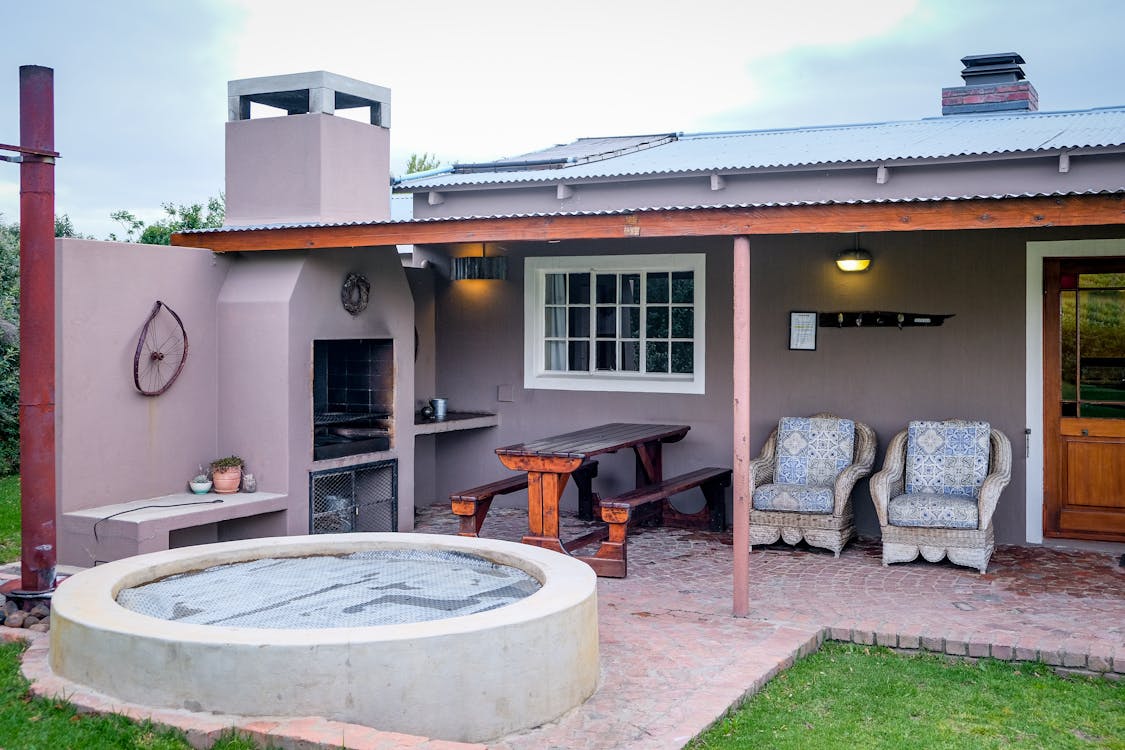
At Gold’s Concrete Services, we’ve poured dozens of hot tub pads across the Kansas City Northland over our 35+ years in business. We’ve seen what happens when a contractor pours a standard 4-inch slab and expects it to hold a fully loaded spa — cracking, settling, and expensive damage that could have been avoided with proper planning.
This guide covers everything you need to know about building the right concrete patio for your hot tub. From slab thickness and reinforcement to drainage, frost protection, and Kansas City-specific considerations, we’ll walk you through the details that separate a successful installation from a costly mistake. Whether you’re planning a dedicated hot tub pad or incorporating a spa into a larger patio project, this information will help you make smart decisions.
How Much Does a Filled Hot Tub Actually Weigh?
Before you can design the right concrete patio hot tub pad, you need to understand exactly what you’re supporting. The weight of a filled hot tub breaks down into three components: the shell, the water, and the people sitting in it. Most homeowners underestimate how quickly these numbers add up.
Here’s the math for common hot tub sizes:
- 6-person hot tub: 800 lbs (dry weight) + 2,500 lbs (approximately 300 gallons of water at 8.34 lbs per gallon) + 900 lbs (occupants) = approximately 4,200 lbs total
- 8-person hot tub: 900 lbs (dry) + 3,340 lbs (approximately 400 gallons) + 1,200 lbs (occupants) = approximately 5,440 lbs total
- Large 8-person model: 1,000 lbs (dry) + 4,175 lbs (approximately 500 gallons) + 1,200 lbs (occupants) = approximately 6,375 lbs total
An 8-person hot tub typically measures 7.5 to 9 feet in length and width with a depth of 36-42 inches. That concentrated weight on a relatively small footprint creates 80 to 150+ pounds per square foot of pressure. For comparison, a standard residential wood deck is rated for only 40-50 pounds per square foot — which is exactly why so many deck-mounted hot tubs end in structural failure.
This is why concrete is the preferred foundation material for hot tub installations. A properly designed concrete pad can handle well over 150 PSF without issue, provided the thickness, reinforcement, and sub-base are specified correctly.
What Concrete Slab Thickness Does a Concrete Patio Hot Tub Need?
The minimum concrete slab thickness for a hot tub pad is 4 inches, but that’s only appropriate for smaller 2-4 person models weighing under 3,000 pounds. For a 6-8 person hot tub — which is what most Kansas City homeowners choose — you need a minimum of 6 inches of concrete with appropriate reinforcement.
Here’s what we recommend based on hot tub size:
- 2-4 person (under 3,000 lbs): 4-inch slab, 3,500 PSI minimum
- 5-6 person (3,000-5,000 lbs): 5-6 inch slab, 4,000 PSI
- 7-8 person (5,000-6,500 lbs): 6-inch slab, 4,000 PSI, rebar required
- Swim spa or large 8+ person (6,500+ lbs): 6-8 inch slab, 4,000+ PSI, rebar plus fiber mesh
At Gold’s Concrete, we pour all our hot tub pads with 4,000 PSI concrete — the same spec we use for our driveways and all exterior concrete. That 4,000 PSI rating means the concrete can withstand 4,000 pounds of compressive force per square inch, providing a substantial safety margin even for the heaviest spa installations.
What Reinforcement Does a Concrete Patio Hot Tub Pad Require?
Concrete is incredibly strong in compression — it handles downward force very well. But it’s much weaker in tension, which is the pulling-apart force that causes cracking. That’s where reinforcement comes in. A concrete patio hot tub pad needs reinforcement for both structural integrity and crack control.

Industry standards — including guidance from the American Concrete Institute on slab-on-ground construction — call for steel reinforcement, typically #3 or #4 rebar in a 12-18 inch grid pattern, placed at mid-depth in any concrete pad over 50 square feet that will bear heavy loads. This rebar grid handles the structural loads from the hot tub’s weight and prevents the slab from cracking under concentrated pressure.
At Gold’s Concrete, we go beyond the minimum with our complete reinforcement system:
- Rebar on 18-inch centers (tighter than standard 30-inch spacing) elevated to the center of the slab for hot tub pads
- Fiber mesh reinforcement mixed throughout the concrete for three-dimensional micro-crack control
- 6% air entrainment for freeze-thaw protection in our Kansas City climate
- 4,000 PSI concrete without fly ash for maximum density and strength
We use both rebar and fiber mesh because they serve different purposes. The rebar handles the heavy structural loads from a 5,000+ pound hot tub. The fiber mesh prevents the hairline cracking that allows water infiltration and freeze-thaw damage over time. It’s a belt-and-suspenders approach that we’ve refined over 35 years of Kansas City concrete work.
Why Is Proper Drainage Critical for Hot Tub Concrete Pads?
Water management is one of the most overlooked aspects of hot tub pad installation — and one of the most important. A hot tub produces water from splashing, condensation, draining, and chemical treatment. Without proper drainage, that water pools around the pad, saturates the sub-base, and creates the conditions for settling, heaving, and freeze-thaw damage.
Your concrete patio hot tub pad needs a drainage slope of 1/8 to 1/4 inch per foot, directed away from your home’s foundation. For an 8-foot span, that’s a maximum of about 2 inches of total slope — enough to move water away efficiently without creating an uncomfortable surface angle under the hot tub.
Here’s our complete drainage approach:
- 4-6 inch compacted gravel sub-base beneath the concrete for drainage and frost heave prevention
- Proper grading to direct surface water away from the house and away from the hot tub equipment
- Expansion of the patio surface beyond the hot tub footprint to manage splash water
- Consideration for drain line routing when the hot tub needs to be emptied (typically every 3-4 months)
Poor drainage is the number one reason we see hot tub pads fail prematurely. Water that pools against the slab edge works its way under the concrete, saturates the soil, and causes the pad to settle unevenly. In Kansas City’s freeze-thaw climate, that trapped water then heaves the slab during winter, creating cracks and an unstable surface.
How Does Kansas City’s Climate Affect Your Concrete Patio Hot Tub Installation?
Kansas City sits right in the heart of the freeze-thaw belt. NOAA climate data shows Kansas City averages January highs of 38 degrees F and lows of 20 degrees F, with roughly 107 days at or below freezing each year. The Midwest averages 42 freeze-thaw cycles annually, with some years seeing 60 or more.

These temperature swings create unique challenges for hot tub pads that you won’t find in milder climates. The area immediately surrounding a hot tub experiences even more extreme temperature cycling than normal concrete because of the heat coming from the spa itself. A 104-degree hot tub sitting on a concrete pad in 10-degree weather creates a significant thermal gradient that puts additional stress on the concrete.
This is why our Kansas City-specific specifications matter:
- 6% air entrainment creates microscopic air pockets that give freezing water room to expand without cracking the concrete. This is the single most important specification for Kansas City exterior concrete. Learn more in our article about durable concrete specifications.
- Compacted gravel sub-base prevents frost heaving by allowing groundwater to drain away from the slab bottom before it can freeze and push the concrete upward.
- Proper cure and seal application reduces water absorption into the concrete surface, limiting the amount of moisture available for freeze-thaw damage.
A contractor from Arizona doesn’t need to worry about any of this. But in Kansas City, these specifications are the difference between a hot tub pad that lasts 30 years and one that starts cracking within the first three winters.
Why Is Concrete Better Than a Wood Deck for Hot Tub Support?
Many homeowners consider putting their hot tub on an existing wood deck. Here’s why that’s often a bad idea — and why a concrete patio hot tub pad is the safer, longer-lasting choice.
Standard residential wood decks are engineered for 40-50 pounds per square foot of live load. A filled 8-person hot tub applies 80-150+ PSF to its footprint. That means a standard deck is carrying two to three times its rated capacity when you add a full hot tub. The North American Deck and Railing Association reports that hundreds of deck collapses occur annually, with many related to overloading.
Concrete advantages for hot tub support:
- Load capacity: A 6-inch reinforced concrete slab handles 150+ PSF without approaching its structural limit. No reinforcement upgrades needed.
- Longevity: Properly specified concrete lasts 30+ years. Wood decks average 15-20 years before major repair or replacement.
- Moisture resistance: Concrete doesn’t rot, warp, or develop mold from constant water exposure. Wood decking around hot tubs deteriorates rapidly from splash water and humidity.
- Maintenance: A sealed concrete pad requires occasional resealing. A wood deck around a hot tub needs annual staining, board replacement, and structural inspection.
- Safety: Concrete with a broom finish or exposed aggregate provides consistent traction when wet. Wood decking becomes dangerously slippery around hot tubs.
Can you build a deck strong enough for a hot tub? Yes — with reinforced joists, additional posts, and engineered beam connections. But at that point, you’re spending more than a concrete pad would cost while still dealing with wood’s inherent maintenance and moisture issues.
What Safety Features Should Your Concrete Patio Hot Tub Area Include?
The Consumer Product Safety Commission provides guidelines for hot tub installations that every homeowner should follow. Beyond the structural requirements of the pad itself, several safety considerations affect how your concrete patio is designed and finished.
Surface texture: The concrete around a hot tub must have a non-slip finish. We use a medium broom finish on all hot tub pad surfaces, which provides excellent traction when wet while still being comfortable for bare feet. This is the same approach we use for our sidewalks and walkways where slip resistance matters.
GFCI protection: All electrical connections for hot tubs must be protected by a Ground Fault Circuit Interrupter. Your concrete pad layout should account for the location of the GFCI disconnect panel, which most codes require within sight of the hot tub but at least 5 feet away from the water’s edge.
Access barriers: Local building codes — including those based on the International Residential Code Appendix G — may require safety barriers around hot tubs, especially if you have children. Your patio design should account for potential fencing, gates, or lockable covers that meet code requirements.
Step access: Most hot tubs sit 30-36 inches above the surrounding surface. Plan for concrete steps or a stepped pad that provides safe entry and exit, especially when the surface is wet.
How Should You Plan Your Concrete Patio Hot Tub Layout?
Smart layout planning now prevents expensive modifications later. Your concrete patio hot tub area needs to account for the spa itself, the surrounding activity space, equipment access, and potential future additions.
Sizing your pad correctly:
An 8-person hot tub typically measures 7.5 to 9 feet on each side. But your concrete pad needs to extend well beyond the hot tub footprint. We recommend a minimum of 3 feet of concrete surface on all sides of the hot tub for safe entry, exit, and movement. For an 8-foot hot tub, that means a pad of at least 14 x 14 feet — and bigger is almost always better.
Equipment and access considerations:
- Equipment panel access: Leave at least 2-3 feet of clear space on the equipment side of the hot tub for service access
- Delivery path: Make sure the hot tub can actually be moved into position after the concrete is poured. Measure gates, pathways, and any obstacles
- Electrical routing: Plan the path from your electrical panel to the hot tub location before pouring. Running conduit under or through concrete after the fact is far more expensive
- Drain routing: Consider where water goes when the hot tub is drained — typically every 3-4 months
Future expansion:
Think about what else you might want in your outdoor space. A fire pit, outdoor kitchen, pergola, or extended entertainment area all connect to your patio. Building a larger pad now — or at least planning expansion joints and connection points — costs far less than tearing out and replacing concrete later. We’ve helped many homeowners in the Kansas City Northland design patios that start with a hot tub and expand into full outdoor living spaces over time.
What Does a Concrete Patio Hot Tub Installation Cost in Kansas City?
The cost of a hot tub concrete pad depends on the size, thickness, and complexity of the project. Current 2025 pricing for quality concrete work in the Kansas City area falls between $8 and $20 per square foot, depending on specifications and finish options.

For a typical hot tub pad project, here’s what to expect:
- Basic hot tub pad (12×12 feet, 6-inch slab): $1,150-$2,880
- Extended patio with hot tub area (16×16 feet): $2,050-$5,120
- Full entertainment patio with hot tub zone (20×20 feet): $3,200-$8,000
These ranges reflect the variation between basic broom-finish concrete and premium options like stamped or colored concrete with decorative borders. All of our quotes include our complete specification system — 4,000 PSI concrete, 6% air entrainment, rebar reinforcement, fiber mesh, compacted gravel sub-base, and professional cure and seal.
The return on this investment goes beyond the hot tub itself. According to the National Association of Realtors, professionally installed patios can boost home value by 8-10%, with an ROI exceeding 80%. More than half of homebuyers say they’d pay a premium for a home with quality outdoor living spaces. Your concrete patio hot tub area is both a lifestyle upgrade and a smart investment.
What Should You Ask Your Contractor About Hot Tub Pad Installation?
Not every concrete contractor has experience with hot tub pad installations. The concentrated loads, drainage requirements, and layout considerations require specific knowledge that goes beyond standard patio work. Here are the questions to ask before you hire:
- “What slab thickness do you recommend for my hot tub model?” — They should ask about your specific hot tub’s weight and dimensions, not give a one-size-fits-all answer.
- “How will you reinforce the pad?” — Look for rebar at 12-18 inch centers, not just wire mesh or fiber alone. For heavy spa loads, rebar is essential.
- “What PSI concrete and air entrainment do you use?” — 4,000 PSI and 5-6% air entrainment are the targets for Kansas City exterior concrete. Lower specs save the contractor money but cost you in durability.
- “How will you handle drainage?” — They should discuss grading, slope direction, and sub-base preparation. If drainage isn’t part of the conversation, find another contractor.
- “What’s your sub-base preparation process?” — A compacted gravel sub-base is essential. Pouring directly on soil invites settling and cracking.
For a complete contractor evaluation guide, read our article on questions to ask a concrete contractor in Kansas City.
How Does Gold’s Concrete Build Hot Tub Pads That Last?
We’ve been pouring concrete across Clay County, Platte County, and the greater Kansas City Northland since 1989. Our hot tub pad installations follow the same rigorous specifications we use for every project — because we’ve learned that cutting corners on any exterior concrete project in our climate leads to premature failure.
Our concrete patio hot tub installation process includes:
- Site evaluation — We assess drainage patterns, soil conditions, access for hot tub delivery, and electrical requirements before we quote the job
- Excavation and grading — Minimum 4-6 inch compacted gravel sub-base with proper drainage slope away from your home
- Reinforcement — Rebar on 18-inch centers elevated to slab center, plus fiber mesh throughout the mix
- Quality concrete — 4,000 PSI with 6% air entrainment and no fly ash
- Professional finishing — Broom finish for slip resistance, hand-tooled control joints, clean edges
- Cure and seal — Professional-grade acrylic cure and seal applied same day for moisture protection
We don’t just pour the pad and leave. We work with you to plan the right size, layout, and finish for your specific hot tub model and outdoor living goals. And because we include fiber mesh, 6% air entrainment, and rebar in every exterior pour at no extra charge, you get our full specification system without paying for upgrades.
Frequently Asked Questions About Concrete Patio Hot Tub Pads
How thick should a concrete pad be for an 8-person hot tub?
A 6-inch thick concrete slab is the recommended minimum for an 8-person hot tub weighing 5,000-6,500 pounds when filled. The slab should be poured with 4,000 PSI concrete, reinforced with rebar on 18-inch centers, and include a compacted gravel sub-base of at least 4-6 inches for drainage and stability.
Can I put a hot tub on my existing concrete patio?
It depends on the patio’s specifications. If your existing patio is at least 4 inches thick with reinforcement and shows no signs of cracking or settling, it may support a smaller hot tub. For 6-8 person models, most existing patios lack the thickness and reinforcement needed. We can evaluate your existing concrete patio and advise whether it’s suitable or if a dedicated pad is needed.
How long does a concrete hot tub pad need to cure before placing the hot tub?
Concrete reaches approximately 70% of its rated strength within 7 days and full strength at 28 days. We recommend waiting a minimum of 7 days before placing a hot tub, with 14 days preferred for heavy 8-person models. Placing a 5,000+ pound hot tub on concrete that hasn’t adequately cured can cause surface damage and reduce the slab’s long-term strength.
Is a concrete pad or gravel pad better for a hot tub?
Concrete is significantly better for hot tub support. Gravel pads can shift and settle unevenly under the concentrated weight, causing the hot tub shell to flex and potentially crack. Gravel also provides poor footing for entry and exit. A properly poured concrete pad provides a level, stable, permanent surface that won’t shift over time.
How far should a hot tub concrete pad be from the house?
Most building codes require hot tubs to be at least 5 feet from the home’s exterior walls, primarily for GFCI electrical safety requirements. We recommend extending the concrete pad surface from the house to the hot tub to create a continuous, slip-resistant walking surface. The drainage slope should always direct water away from the foundation.
Do I need a permit for a concrete hot tub pad in Kansas City?
Permit requirements vary by jurisdiction in the Kansas City metro area. Many locations require permits for concrete work exceeding certain square footage thresholds, and hot tub installations may require separate electrical permits. We handle the concrete specifications and can guide you on local requirements for your area in Clay County or Platte County.
What finish should I choose for concrete around a hot tub?
A medium broom finish is the most practical choice for concrete patio hot tub areas. It provides excellent wet traction for bare feet while remaining comfortable to walk on. Stamped concrete and exposed aggregate are also popular options that offer good slip resistance with a more decorative appearance. We’ll help you choose the right finish for your aesthetic preferences and safety needs.
Ready to Build Your Perfect Concrete Patio Hot Tub Pad?
Building the right concrete foundation for your hot tub isn’t complicated when you work with an experienced contractor who understands the specifications that matter. At Gold’s Concrete Services, we’ve spent 35+ years perfecting our approach to Kansas City concrete — and every hot tub pad we pour includes the same comprehensive specification system that makes all our work stand the test of time.
Don’t trust your hot tub investment to a contractor who pours standard 4-inch slabs and hopes for the best. Your 8-person hot tub deserves a concrete patio built specifically for its weight, your drainage needs, and Kansas City’s demanding freeze-thaw climate. We’ll help you plan the right size, layout, and specifications for your project — and include fiber mesh, rebar, 6% air entrainment, and professional cure and seal in every pour.
Contact Gold’s Concrete Services today at (816) 300-1563 or request a free quote online for your concrete patio hot tub installation. We serve the entire Kansas City Northland including Clay County, Platte County, and surrounding areas.
Gold’s Concrete Services — Family & Veteran Owned | Serving the Kansas City Northland Since 1989 | Licensed & Insured