
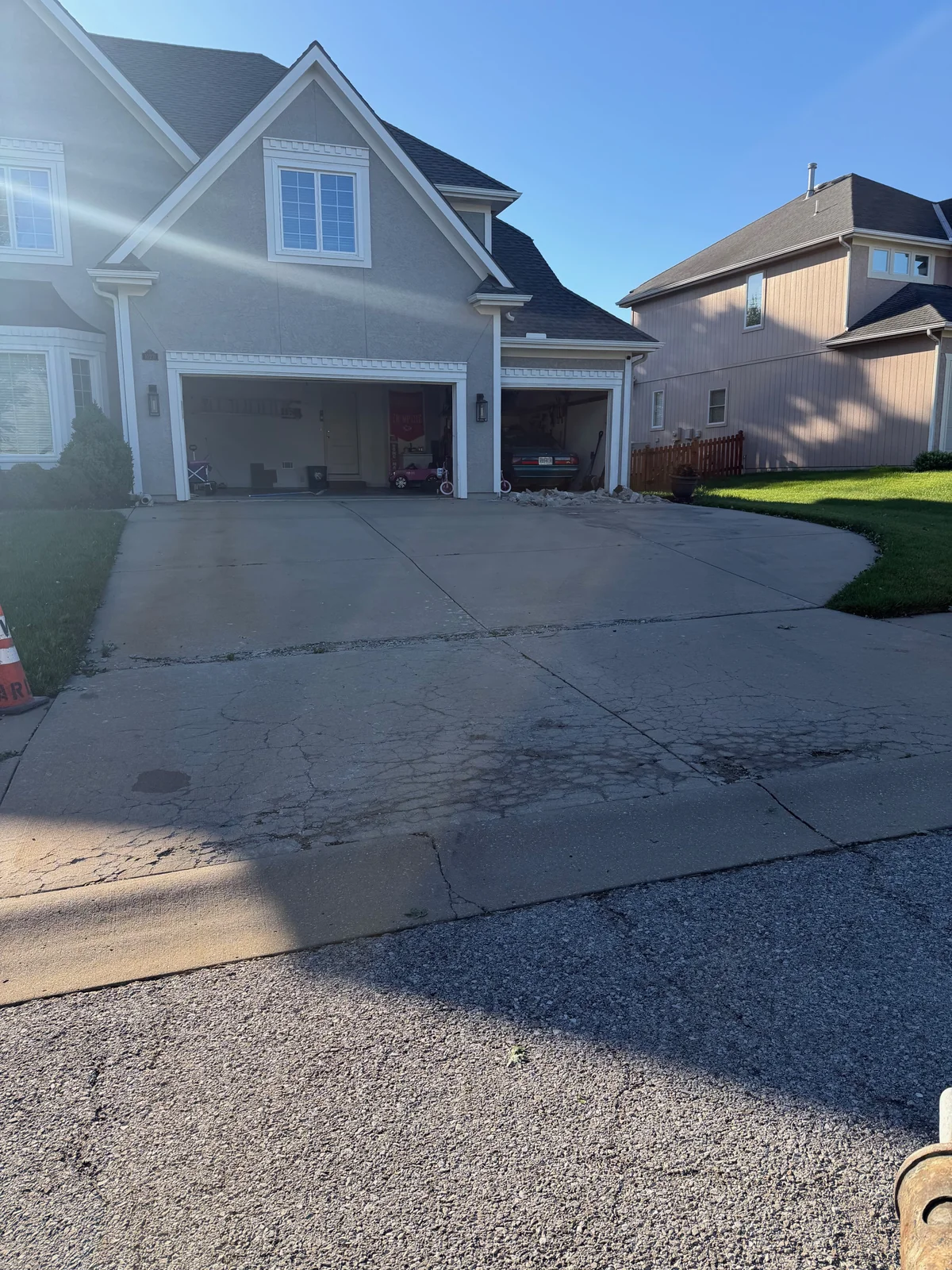
If your driveway shows crescent-shaped hairline cracks running parallel to the joints, you’re not looking at ordinary shrinkage. That pattern is the signature of d-cracking concrete — a progressive form of durability failure caused by freeze-thaw cycles. Kansas City sees roughly 107 freeze-thaw cycles per year according to NOAA climate data, which makes this region one of the toughest environments in the country for concrete. This guide walks through the 7 warning signs every Kansas City homeowner should know, why the damage can’t be patched, and how properly-designed concrete resists it for decades.
What Is D-Cracking Concrete?
D-cracking — short for “durability cracking” — is a progressive form of concrete deterioration that starts inside the slab and works its way to the surface. Per the FHWA’s authoritative guide on materials-related distress, the damage begins when moisture-absorbing coarse aggregates trapped inside the concrete expand as water freezes, then contract when it thaws.
That expand-contract cycle repeats every winter. Over time, the aggregates fracture internally. The concrete around them starts to break apart. What you eventually see on the surface is a network of thin, curved cracks running parallel to joints and edges — often stained darker than the surrounding slab because water has been seeping through them for years.
The critical thing to understand? D-cracking isn’t a surface problem. It’s structural failure from the inside out. By the time you can see it, the aggregate matrix is already compromised. That’s why patching, sealing, or resurfacing won’t fix it — those methods only address what’s on top, not the failing structure underneath.
Why Kansas City Sees More D-Cracking Concrete Than Most Cities
Two factors make Kansas City a textbook case for d-cracking concrete: the freeze-thaw climate and the regional aggregate supply.
Kansas City averages roughly 107 freeze-thaw cycles per year — nights that dip below freezing followed by days that thaw. Each cycle stresses the concrete. Water expands about 9% when it freezes, which means every trapped droplet becomes a tiny wedge trying to split the material apart. Multiply that by more than 100 events annually, and you have one of the harshest freeze-thaw environments in the continental United States.
The second factor is the aggregate. Missouri and Kansas both sit on limestone and dolomite geology. Many of these regional aggregates have high water absorption — the Iowa DOT’s durability cracking research shows aggregates with more than about 0.5% absorption are far more likely to cause d-cracking. That’s why both Kansas and Iowa use an extended 90-day moist curing time when testing aggregates — normal 28-day tests miss the slow-motion failure mode that unfolds over years.
Combine harsh winters with susceptible local rock, and you get driveways that fail decades before their design lifespan. Without the right countermeasures, ordinary residential concrete in Kansas City is on borrowed time.
The 7 Warning Signs of D-Cracking
How do you know if you have d-cracking rather than normal concrete cracking? These 7 signs, taken together, form a reliable diagnostic pattern.
1. Crescent-Shaped Hairline Cracks Parallel to Joints
The number one signature. Look at your control joints and expansion joints. If you see thin, curved cracks that follow the joint line — often just a few inches away, running parallel — that’s the classic d-cracking fingerprint. Ordinary shrinkage cracks tend to run randomly or straight across a slab. D-cracks curve and cluster along the joints because that’s where moisture has the easiest path in.
2. Cracks Concentrated Near Edges and Expansion Joints
D-cracking always starts where water can reach the aggregate: joints, slab edges, and areas near lawn or landscape beds that stay damp. If your cracking is concentrated along these features rather than scattered evenly across the slab, freeze-thaw damage is the likely cause.
3. Dark Staining Along Crack Lines
Water and dissolved minerals travel through d-cracks, then leach out and dry on the surface. Over time, that leaves a distinctive dark band along both sides of each crack. The staining is often more visible after rain when the surrounding concrete is still wet.
4. Progressive Spalling and Surface Flaking
As the internal damage worsens, chunks of the surface begin to pop off — small at first, then larger. This is called “spalling.” If you can see aggregate stones exposed on the surface where they weren’t before, the concrete matrix around them has failed.
5. Visible Aggregate on the Surface
Fresh concrete looks smooth and uniform. Aged concrete with d-cracking exposes the rocks embedded in it because the paste holding them has crumbled. Run your hand across the surface — if it feels rocky and uneven rather than smooth, that’s advanced material distress.
6. Cracks That Reappear After Patching
Homeowners often try to seal or patch d-cracks. Within a season, the same cracks reappear — sometimes exactly where they were, sometimes shifted a few inches. That’s because the patch only covers the surface. The failing aggregate underneath keeps expanding and cracking every winter.
7. Structural Failure at Joint Intersections
The final and most severe stage: entire chunks of concrete break loose at joint intersections. You’ll see broken corners, missing pieces, and rubble along the sides of the driveway. By this point, the slab has lost its structural integrity and full replacement is the only safe fix.
How D-Cracking Concrete Differs from Normal Cracks
Not every crack is d-cracking. Understanding the difference matters because normal cracks can often be sealed and monitored — d-cracking cannot.
Normal shrinkage cracks form during the first year after a pour. They tend to be straight, appear at random locations, and don’t progress significantly over time. Settling cracks happen when the ground beneath the slab shifts, and they show up as diagonal lines or offset joints. Neither of these is structural failure of the concrete itself — the material is fine, but it’s responding to external forces.
D-cracking is different. The damage is happening inside the concrete matrix. The aggregate is fracturing. The paste is separating from the aggregate. The slab is losing its ability to carry load. That’s why d-cracking concrete gets worse every winter and why surface treatments don’t stop it. You’re not fixing a symptom — you’re chasing a failing material.
The distinction also matters for insurance and disclosure. Normal cracks are cosmetic. Advanced d-cracking is a structural defect that affects property value and, in some cases, safety. Kansas City homeowners preparing to sell often discover the difference the hard way during a buyer’s inspection.
Can D-Cracking Concrete Be Repaired?
The short answer is no. D-cracking is a materials failure — the aggregate itself has broken down inside the slab — which means every visible crack is a symptom of damage you can’t reach. Sealers, epoxies, and patch products can hide the surface temporarily, but the freeze-thaw cycles that caused the damage in the first place will continue every winter, and the aggregate underneath will keep failing.
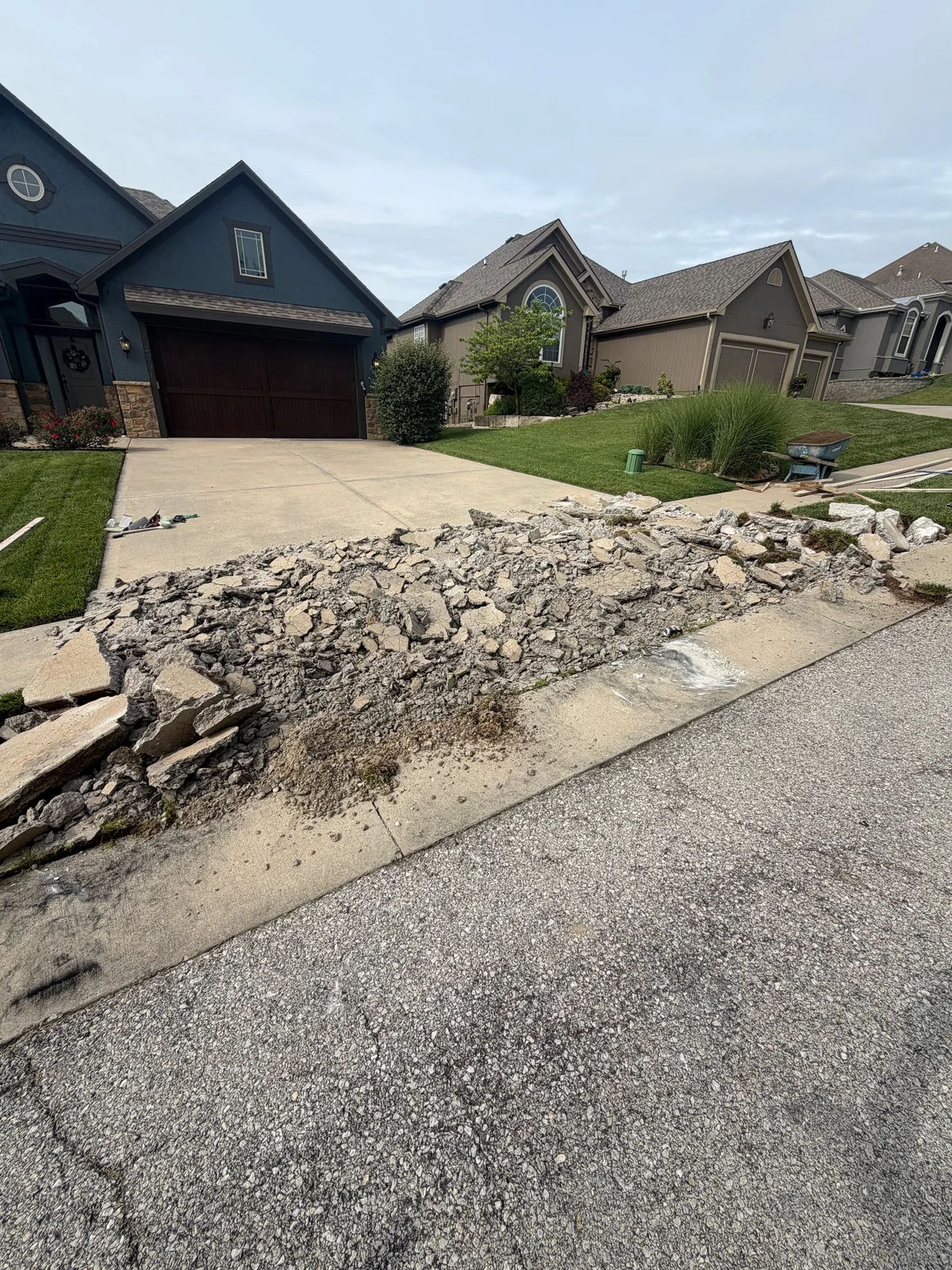
The only real fix is full removal and replacement. That means demolishing the failed slab, hauling away the broken concrete, preparing a fresh base, and pouring a new driveway designed with the countermeasures that prevent d-cracking from starting over. It’s a bigger project than patching, but it’s the difference between a driveway that lasts another 25-30 years and one that keeps failing every spring.
Some contractors will offer to overlay a fresh layer of concrete on top of a d-cracked slab. Don’t accept it. The overlay bonds to the failing material below, which means when the original slab keeps cracking, the new layer cracks with it. Within a few winters, you’re back to the same problem — only now you’ve paid twice.
How Gold’s Concrete Prevents D-Cracking in New Pours
The right mix design stops d-cracking before it starts. Two techniques do most of the heavy lifting in every Gold’s Concrete driveway: 6% air entrainment and fiber mesh reinforcement.
Air entrainment is the single most important defense against freeze-thaw damage. It’s a controlled process that introduces microscopic air bubbles throughout the concrete — typically 5 to 8 percent by volume. When water inside the slab freezes, it has somewhere to expand into. Peer-reviewed research on freeze-thaw durability of air-entrained concrete shows properly air-entrained mixes dramatically outlast non-entrained concrete under repeated freeze-thaw cycling. That’s why every Gold’s driveway is poured with 6% air entrainment specified in the mix.
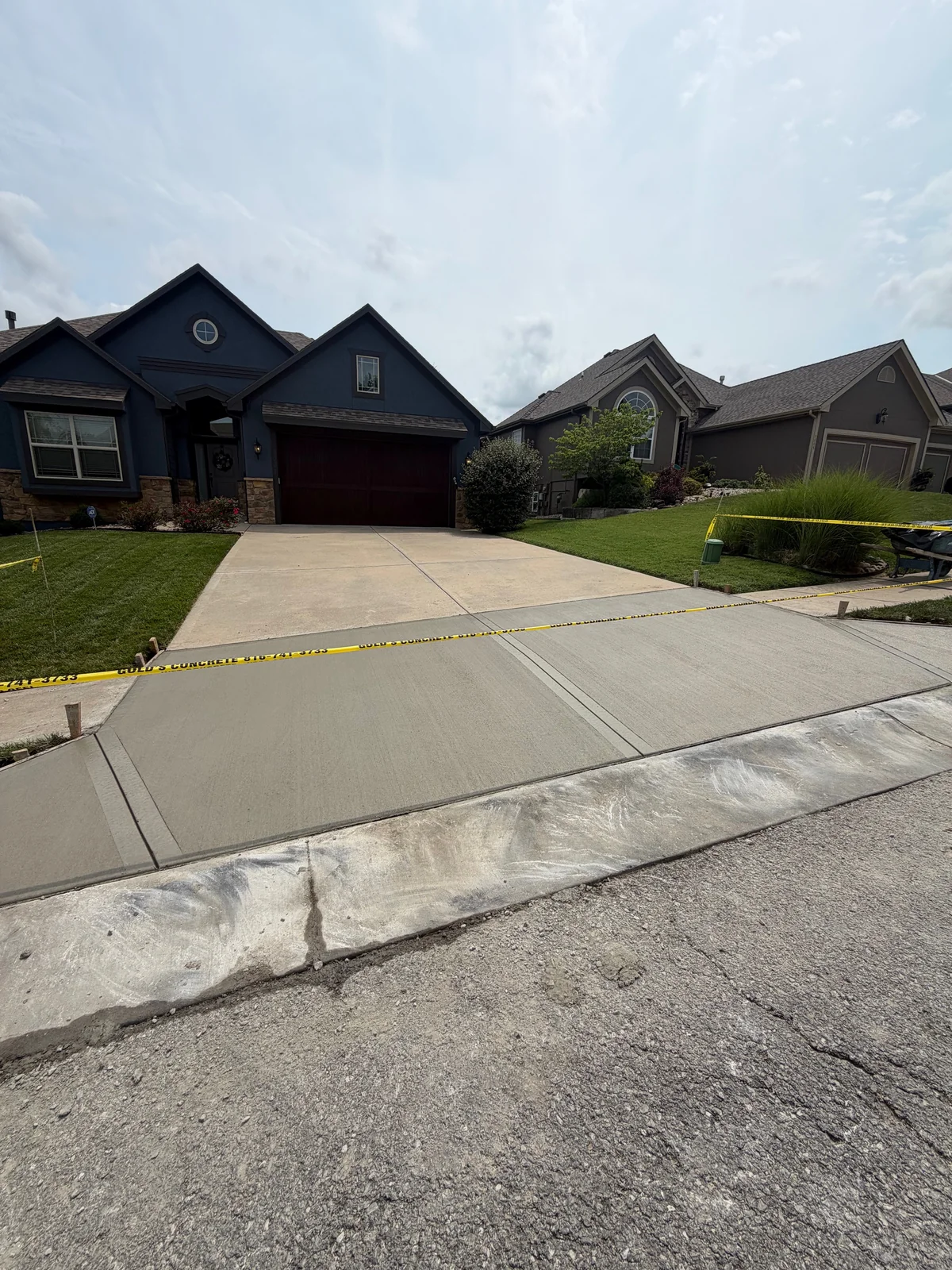
The second defense is fiber mesh reinforcement. Steel-fiber or polypropylene-fiber mesh is added to the mix before the pour, distributing reinforcement throughout the entire slab rather than just at the rebar grid. Fibers hold micro-cracks together as they form, preventing the small cracks from linking up into large ones. When freeze-thaw stresses do try to open a crack, the fibers bridge across it and resist further growth.
Together, these two techniques transform a driveway from a 10-15 year asset into a 25-30 year asset — even in Kansas City’s punishing climate. Both are standard on every residential pour we do.
What to Expect from a D-Cracking Concrete Replacement
Full driveway replacement typically takes 2-4 days from demolition to walkable finish, though full curing for vehicle traffic requires about 7 days. Here’s how the process runs on a typical Kansas City residential job.
Day 1 is demolition. The old slab is broken up with a hydraulic hammer, then loaded onto a haul-off truck. Any failing base material — soft spots, poor drainage areas, undermined edges — gets excavated and corrected. This is a critical step. Pouring new concrete over a bad base guarantees future failure regardless of mix design.
Day 2 is form work and base prep. Fresh compacted base material goes down, forms are set to establish the correct slope for water runoff, and any control joints are planned. If you’re expanding the driveway or changing the shape, that gets built into the forms.
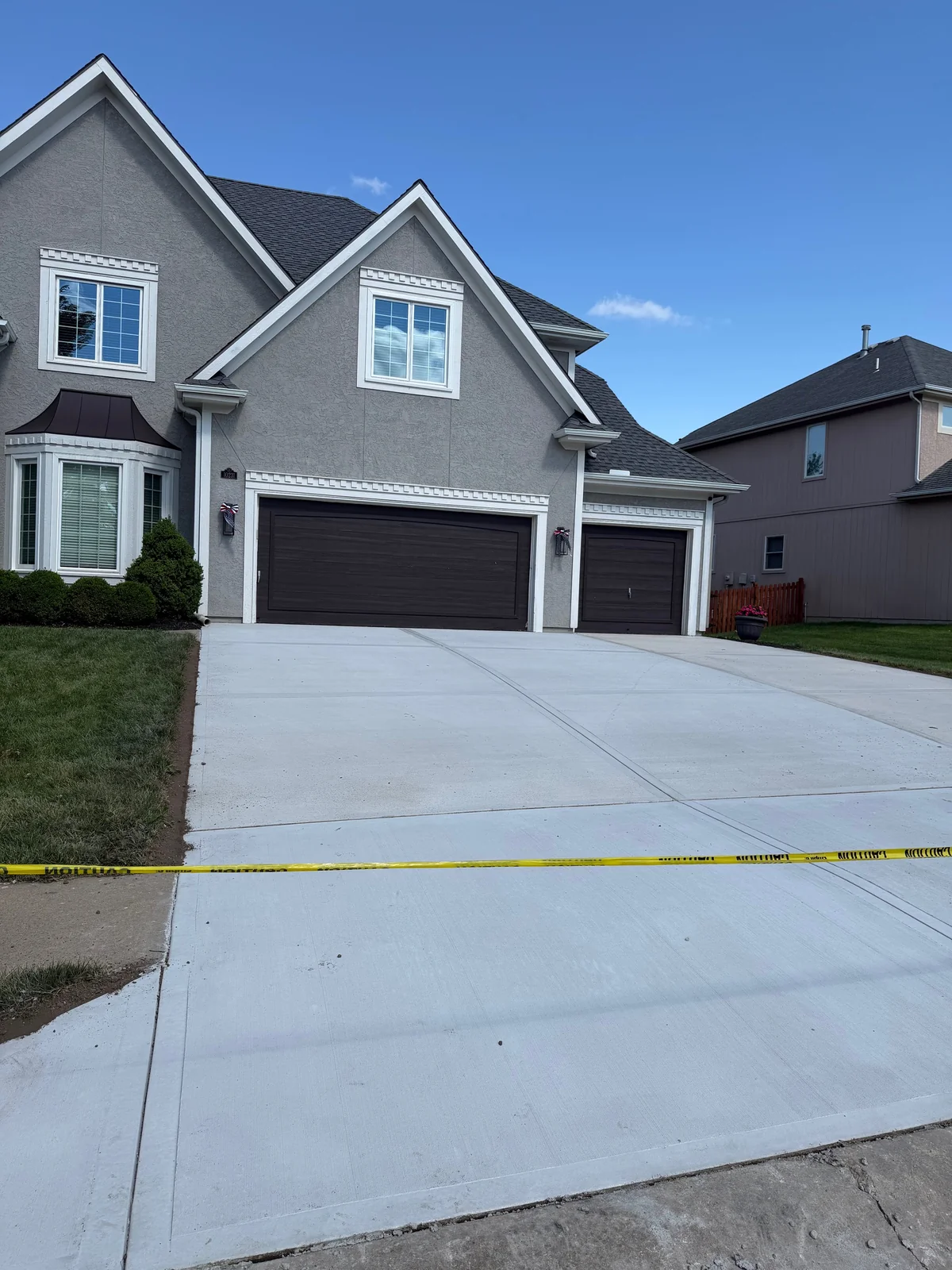
Day 3 is the pour. Concrete arrives from the plant with the specified 6% air entrainment and fiber mesh already blended in. The mix is placed, screeded to grade, floated, edged, and finished with a broom texture for grip. Control joints are cut once the surface is firm. Yellow caution tape goes up to keep foot and vehicle traffic off the fresh concrete for the required curing period.
Days 4-7 are curing. The concrete gains most of its strength in the first week. Light foot traffic is usually safe after 24-48 hours; vehicles need the full 7 days. Long-term maintenance — periodic sealing every 3-5 years — keeps the surface in shape for the long haul.
Frequently Asked Questions
How long does it take for d-cracking to appear?
Most driveways poured without proper air entrainment start showing d-cracking symptoms within 10-15 years in Kansas City. Some show early signs even sooner — as little as 5-8 years — depending on aggregate quality and site drainage. Concrete with proper 6% air entrainment and fiber mesh typically lasts 25-30 years before any similar deterioration.
Is d-cracking dangerous?
Cosmetically, no — early-stage d-cracking is just unsightly. But advanced d-cracking becomes a real hazard. Loose chunks can create tripping hazards, exposed rebar can catch tires and pets, and broken slab edges undermine any walking surfaces adjacent to the driveway. It’s also a property disclosure issue in Kansas and Missouri real estate transactions.
Can I just seal over d-cracking?
Sealers hide the cracks temporarily but do not stop the underlying damage. The freeze-thaw cycles that caused the d-cracking will continue every winter, and the same cracks will return — usually within one or two seasons. Sealing works well on healthy concrete as preventative maintenance, not as a repair for structurally-compromised slabs.
What does driveway replacement cost in Kansas City?
Costs vary based on square footage, demolition complexity, base condition, and any design changes. Most residential replacements in the Kansas City Northland — including demo, haul-off, base prep, forms, mix design, pour, and finishing — fall in a predictable range. Request a free quote for pricing on your specific project.
Will fiber mesh guarantee my driveway won’t crack?
No mix design eliminates every possible crack — concrete is a natural material and will always develop hairline shrinkage lines. What fiber mesh does is prevent those small cracks from linking up into structurally-significant damage. Combined with 6% air entrainment and proper control joint spacing, fiber mesh dramatically extends the functional life of the slab.
Do you serve areas outside Kansas City proper?
Yes. Gold’s Concrete Services covers the entire Kansas City Northland — Kearney, Liberty, Gladstone, Northmoor, Parkville, Riverside, Smithville, North Kansas City, Platte City, and both Clay and Platte counties. Call (816) 300-1563 or use the contact form to schedule an on-site evaluation.
Replace Your D-Cracking Concrete Driveway the Right Way
D-cracking concrete isn’t a repair problem — it’s a materials failure that only responds to full replacement with proper mix design. If your driveway shows the crescent-shaped cracks parallel to joints, the dark staining, or the spalling described above, the freeze-thaw damage is already inside the slab and will keep progressing every winter.
Gold’s Concrete has served the Kansas City Northland since 1989. Every residential pour includes 6% air entrainment, fiber mesh reinforcement, and the base preparation that gives your new concrete driveway the best possible chance to last 25-30 years even in this climate. Call (816) 300-1563 or request a free quote — we’ll evaluate your existing driveway, confirm whether you’re dealing with d-cracking, and give you a straight estimate on a proper replacement.